


The Illinois lemon law does not cover used cars. The New Vehicle Buyer Protection Act at 815 ILCS 380 applies to new passenger cars, light trucks, and recreational vehicles under 8,000 pounds, and only to defects that show up in the first 12 months or 12,000 miles, whichever comes first (Illinois Attorney General, 2026). Once a vehicle is sold and titled to a consumer, that door closes.
That is where nearly every article on this subject stops. It is also where most Illinois used-car buyers give up on money they are legally owed.
Four separate laws pick up where the lemon law drops off, and one of them is a state statute written specifically for used-car buyers. Here is the whole picture in one table.
| Law | Applies to | What triggers it | What you can get |
|---|---|---|---|
| Illinois lemon law, 815 ILCS 380 | New vehicles only, 12 months or 12,000 miles | 4 repair attempts on the same defect, or 30+ business days out of service | Replacement vehicle or full refund minus a use allowance |
| Illinois used-car powertrain warranty, 815 ILCS 505/2L | Used cars from a licensed dealer or public auction | A powertrain defect inside 15 days or 500 miles | Repairs, or a full refund of the purchase price in exchange for the car |
| Magnuson-Moss Warranty Act, 15 U.S.C. 2301 et seq. | Any used car sold with a written warranty or a service contract | Breach of that warranty after a reasonable number of repair attempts | Damages, plus your attorney fees paid by the other side |
| Illinois Consumer Fraud Act, 815 ILCS 505 | Any sale involving misrepresentation or concealment | Odometer rollback, hidden accident or flood history, false advertising | Actual damages, sometimes punitive damages, plus fees |
The rest of this guide walks through each one, in the order an Illinois buyer actually encounters them.

Every used car sold at retail by a licensed Illinois dealer carries a mandatory implied warranty of merchantability covering the powertrain for 15 calendar days or 500 miles after delivery, whichever comes first. This is 815 ILCS 505/2L, effective for sales on or after July 1, 2017. The dealer cannot exclude it, modify it, or disclaim it, and trying to do so makes the purchase agreement voidable at your option.
Consider Denise, who buys a 2018 Equinox for $14,900 from a lot on Cermak. On day nine, with 340 miles on the car, the transmission starts hunting between gears. The salesman points at the “as is” line and shrugs.
The salesman is wrong, and the statute says so in plain English.
Section 2L(d) does not leave “powertrain” to interpretation. It lists the parts.
| Covered under Section 2L(d) | Not covered |
|---|---|
| Engine block, head, all internal engine parts | Infotainment screen, speakers, backup camera |
| Oil pan and gaskets, water pump, intake manifold | Air conditioning, heater, blower motor |
| Transmission and all internal transmission parts | Brakes, suspension, steering |
| Torque converter, drive shaft, universal joints | Tires, battery, alternator, starter |
| Rear axle, all rear axle internal parts, rear wheel bearings | Paint, upholstery, body panels |
The warranty is met, in the statute’s words, if the car functions for ordinary transportation on a public highway and is substantially free of a powertrain defect. A rattling door panel is not a Section 2L claim. A transmission that will not hold a gear is.
Both clocks run in your favor more than the raw numbers suggest, and this is the part almost nobody reports.
Under Section 2L(c) and 2L(e), a day on which the warranty is breached is excluded from the 15, and so is every later day the car still fails to conform. Miles driven to or by the seller in connection with repairing, servicing, or testing the car are excluded from the 500.
So if Denise’s transmission fails on day nine and stays broken, days nine onward do not count against her. The 15-day window is 15 days of a car that works, not 15 days on a calendar.
Section 2L(f) requires you to give the seller reasonable notice no later than 2 business days after the end of the statutory warranty period. Miss it and the claim is gone, no matter how bad the defect is.
The statute is unusually generous about what counts as notice. Any of these work:
Send it in a form that leaves a record. A text with a timestamp beats a phone call you cannot prove happened. Then give the dealer a reasonable chance to repair the car before you pursue any other remedy under Article 2 of the Uniform Commercial Code.
You pay half the cost of the first two repairs needed to bring the car into compliance, capped at $100 for each repair. If you bring the car back a second time for the same defect, your total exposure is $100. The dealer covers the rest.
Section 2L(g) sets the ceiling on the other side. The seller’s maximum liability for repairs is the purchase price you paid, refunded to you or your lender in exchange for returning the vehicle. A dealer facing a $9,000 transmission job on a $14,900 car has a statutory exit that looks a lot like a buyback, and it is the reason these claims settle.
Six exemptions are written into subsections (b), (b-5), and (b-6). Check yours before you build a claim on this statute.
Private-party sales are not covered either. Section 2L(a) reaches licensed dealers and public auction companies, so a car bought from a neighbor through Facebook Marketplace falls outside it entirely. Our guide on whether lemon law applies to private sales covers what is left in that situation.
Section 2L(h) requires your purchase agreement to carry a specific statement, on its face or in a separate document, in conspicuous boldface type of 10 points or larger. The statement has to tell you the car will be free of a powertrain defect for 15 days or 500 miles, define “powertrain component,” and disclose that you may owe up to $100 for each of the first two repairs.
If that paragraph is not in your paperwork, the agreement is voidable at your option.
Go get your folder. This takes 90 seconds, and it is the single highest-value thing you can do before calling anyone. A dealer who skipped the disclosure has handed you leverage that has nothing to do with how bad the car is.
An “as is” designation on an Illinois used-car sale does not erase the Section 2L powertrain warranty, and federal law adds two more ways it can fail. The Illinois Attorney General publishes an “As Is Cars, Know the Warning Signs” poster in English, Spanish, Chinese, and Korean, which tells you how often this comes up (Illinois Attorney General, 2026).
The window sticker on every used car at a licensed dealer is the Buyer’s Guide, required by the FTC Used Car Rule at 16 CFR Part 455. Two things about it are worth knowing.
First, 16 CFR 455.2(b)(1)(ii) says that where state law limits or prohibits “as is” sales, the state law overrides the federal rule, the “As Is – No Dealer Warranty” heading must be deleted from the form, and an “Implied Warranties Only” disclosure must be substituted (eCFR, 2026). Illinois limits as-is sales for the first 15 days or 500 miles. An Illinois dealer displaying a plain “as is” Buyers Guide on a Section 2L vehicle is a fact worth showing your attorney.
Second, the final Buyer’s Guide is incorporated into your contract of sale, and it overrides contrary provisions in that contract (16 CFR 455.3). If the window form promised a warranty and the contract says otherwise, the window form wins. Keep your copy.
Federal law shuts down an “as is” disclaimer in two situations, under 15 U.S.C. 2308(a). A supplier cannot disclaim or modify implied warranties if it gives you any written warranty on the product, or if it enters into a service contract with you at the time of sale or within 90 days afterward. Section 2308(c) makes a violating disclaimer ineffective under both federal and state law.
Now picture the standard Illinois finance office. The salesperson checks “as is.” Then the finance manager sells you a 48-month extended service contract before you leave the building.
That service contract is exactly what Section 2308(a)(2) describes. Check what you signed, including anything added in the 90 days after delivery. Our explainer on the federal lemon law for used cars covers how the Magnuson-Moss claim gets built from there, and if you bought with no paperwork at all, see whether lemon law applies to used cars with no warranty.
You do not need $50,000 at stake to bring a Magnuson-Moss claim. The $50,000 floor at 15 U.S.C. 2310(d)(3)(B) applies only to suits filed in federal district court. Section 2310(d)(1)(A) lets you sue in any state court of competent jurisdiction, and Illinois state court carries no such threshold. The only broadly applicable floor is the $25 minimum on an individual claim at Section 2310(d)(3)(A).
One prerequisite is real. Under 15 U.S.C. 2310(a)(3), if the written warranty names an informal dispute settlement procedure that meets FTC requirements, you have to go through it before filing. Read the warranty booklet.
The Illinois lemon law, 815 ILCS 380, gives new-vehicle buyers a replacement or a refund when the manufacturer cannot fix a substantial defect. Understanding its exact terms matters even for used-car buyers, because the numbers get misquoted constantly and because the vehicle you bought may still be inside its original window.
| Element | Illinois New Vehicle Buyer Protection Act |
|---|---|
| Statutory warranty period | 1 year or 12,000 miles from delivery, whichever comes first |
| Vehicles covered | New cars, light trucks and vans under 8,000 lbs GVWR, recreational vehicles |
| Use required | Personal, family, or household. Commercial use is excluded |
| Repair presumption | Same nonconformity repaired 4 or more times, or 30+ business days out of service |
| Required first step | Manufacturer’s dispute resolution program, if one is offered |
| Remedy | Comparable replacement vehicle, or full purchase price refunded, less a use allowance |
| Deadline to sue | 18 months from original delivery |
Note the numbers, because published guides get this wrong regularly. Illinois is 12 months and 12,000 miles, not 24 months and 24,000 miles. The out-of-service threshold counts business days, not calendar days, which is roughly six weeks of real time.
A used car that is only a year old can still be inside somebody’s original statutory warranty period. If you bought a nine-month-old vehicle with 9,000 miles and the defect was reported to a dealer before you owned it, that repair history belongs in your file. Whether the statute reaches you as a subsequent purchaser is a definitional question your attorney should run on your specific facts rather than something to assume either way.
For the mechanics of the new-car process, see how a lemon law claim works and how many repairs it takes before lemon law applies.
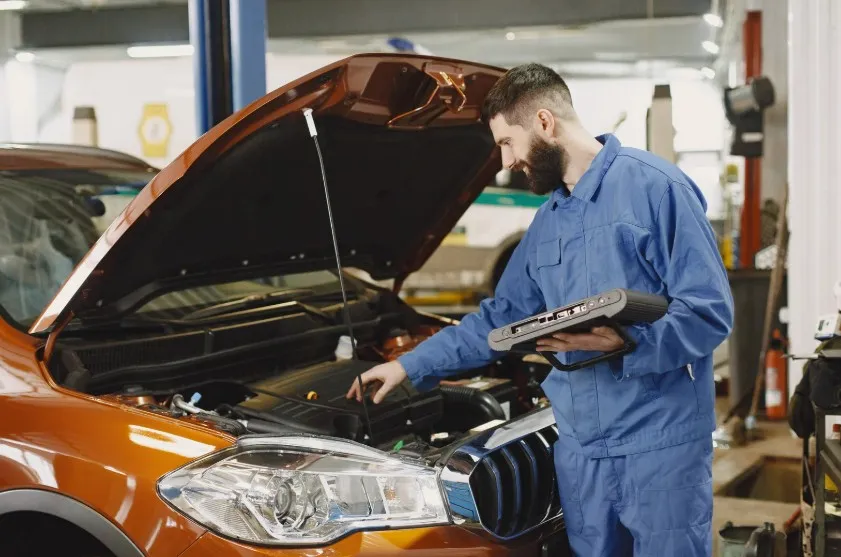
Illinois used-car claims resolve in one of four ways, and each has its own math. There is no published buyback formula for used cars in Illinois because no Illinois statute creates a used-car buyback. What exists instead are three real remedies plus a negotiated one.
This is the default warranty remedy. Section 2-714(2) of the Illinois UCC (810 ILCS 5/2-714) measures your damages as the difference, at the time and place of acceptance, between the value of the car as delivered and what it would have been worth if it had matched the warranty.
Run it with Denise’s numbers. She paid $14,900. The transmission rebuild is quoted at $5,200. She has the car appraised with the defect disclosed, and it comes back at $8,100.
The gap the statute measures is $6,800, not the $5,200 repair quote. The quote is evidence of the gap, not a cap on it.
On top of that, 810 ILCS 5/2-715 allows incidental and consequential damages in a proper case, which covers towing, storage, a rental car while the vehicle sat, and the cost of an independent diagnostic.
Revocation of acceptance under 810 ILCS 5/2-608 is the closest thing an Illinois used-car buyer has to a lemon law buyback. You revoke, the seller takes the car back, and you stop paying for something you cannot drive.
Three conditions have to line up. The defect must substantially impair the car’s value to you. You must have accepted the car either on a reasonable assumption the problem would be fixed and it was not, or without discovering the problem because it was hard to spot or because the seller induced you past it. And you must act within a reasonable time after discovering the defect, before the car’s condition changes substantially for reasons other than the defect.
Revocation is not effective until you tell the seller. Driving the car for another eight months while you think it over is how this remedy disappears.
Where the powertrain warranty applies and the dealer cannot or will not repair, the statute caps the dealer’s liability at the purchase price, refunded in exchange for return of the vehicle. This is the fastest path to a full unwind in Illinois used-car law, and it runs entirely on the 15-day or 500-mile timeline described above.
No Illinois statute creates this one. It is a negotiated outcome. The dealer or manufacturer pays you a sum, you keep the car and a clean title, and the claim closes.
Buyers choose it when the defect is liveable, when the car is otherwise worth keeping, or when the title branding that follows a repurchase would cost more than the defect does. What the number looks like depends on the vehicle, the defect, the repair history, and what the other side thinks a judge would do, which is why nobody can quote you an average with a straight face. Our lemon law buyback calculator walks through the arithmetic on the new-car side.
Search volume for “Illinois lemon law buyback formula” is real, and the honest answer is that Illinois never wrote one for used cars. On the new-car side, 815 ILCS 380/3(c) defines the use allowance as the amount attributable to wear and tear incurred before the first report of the nonconformity to the seller, plus any later period the car was not out of service for repair.
That is a meaningfully better deal than the mileage-based formulas used in some other states. The Illinois offset stops accruing at the moment you first report the problem, not at the moment the manufacturer finally buys the car back. Every month of fighting after that first repair order does not increase your deduction.
Both of the main Illinois routes shift fees to the other side. Under 815 ILCS 505/10a(c), a court may award reasonable attorney fees and costs to the prevailing party in a Consumer Fraud Act case. Under 15 U.S.C. 2310(d)(2), a consumer who finally prevails on a Magnuson-Moss claim may recover fees based on actual time spent, on top of the judgment.
That fee-shifting is the mechanism behind contingency work in warranty cases. The fee award comes from the dealer or manufacturer, not out of your recovery. See what lemon law attorneys actually cost for how the arrangement works in practice.
Two honest limits on the Consumer Fraud Act, because they change how these cases get built. When the defendant is a licensed vehicle dealer, 815 ILCS 505/10a(a) requires proof of public injury to state a claim, shown through a statutory violation with public-interest impact, similar conduct before yours, or a real potential for repetition. A one-off bad sale with no pattern behind it is a harder Consumer Fraud Act case than most buyers expect. And punitive damages against a dealer require willful conduct done with evil motive or reckless indifference. This is why the warranty theories usually carry the claim and the fraud count rides alongside.
Different theories run on different clocks and they do not wait for each other. The first row is the one people miss.
| Claim | Deadline | Clock starts |
|---|---|---|
| Powertrain warranty notice to dealer, 815 ILCS 505/2L(f) | 2 business days | End of the 15-day or 500-mile period |
| Revocation of acceptance, 810 ILCS 5/2-608(2) | A reasonable time, before the car’s condition substantially changes | When you discovered the defect or should have |
| Illinois Consumer Fraud Act, 815 ILCS 505/10a(e) | 3 years | When the cause of action accrued |
| Breach of express or implied warranty, 810 ILCS 5/2-725 | 4 years | Tender of delivery |
| Magnuson-Moss, which follows the state UCC period | 4 years in Illinois | Tender of delivery |
| Illinois lemon law, new cars only, 815 ILCS 380/6 | 18 months | Original delivery of the vehicle |
One trap inside the four-year rule. Under 810 ILCS 5/2-725(2), the clock runs from tender of delivery, not from the day the car broke. A defect that surfaces in year three leaves you about a year, not four. The exception is a warranty that explicitly extends to future performance, where the clock starts at discovery.
Parties can shorten the UCC period by agreement to as little as one year. They cannot extend it. If your contract contains a limitations clause, that clause may be your real deadline.
Speed matters more in Illinois than in almost any other state, because the Section 2L window is measured in days. Work this list in order.
Documentation is what separates a claim that settles from a claim that stalls. The buyers who lose these cases rarely lose because the defect was not real.

Illinois has a remedy for a problem no lemon law addresses, and almost no consumer knows it exists. If a dealership took your trade-in and closed without paying off the loan on it, or sold you a car with an undisclosed lien, the Illinois Dealer Recovery Trust Fund may cover the loss.
Dealers pay $500 a year into the Fund, created by Public Act 097-0480, and a board administers claims. The Illinois Attorney General publishes the claim form and the procedural rules (Illinois Attorney General, 2026).
This is the scenario where a buyer ends up responsible for two car loans through no fault of their own. If it describes your situation, file the Fund claim in parallel with anything else you are doing rather than after.
People do not search in keywords anymore. They type the whole problem. Here are the ones that come up most often for Illinois used cars, answered directly.
Yes, and you are almost certainly inside the strongest window Illinois offers. Transmission internals are named in the Section 2L(d) powertrain list. If a licensed dealer sold you the car within the last 15 days and you have driven under 500 miles, the dealer owes you a repair, and you owe at most $100 for each of the first two. Send written notice now.
No. In Illinois, an “as is” clause does not cancel the 15-day or 500-mile powertrain warranty, and an attempt to disclaim it makes the purchase agreement voidable at your option. If the dealer also sold you a service contract at the sale or within 90 days after it, 15 U.S.C. 2308(a)(2) blocks the disclaimer of implied warranties on top of that.
No. Illinois has no cooling-off period for vehicle purchases. Once you sign, the car is yours unless a warranty, a fraud claim, or a financing contingency gives you a way out. Buyer’s remorse alone is not a legal basis for return, which we cover in detail in the Illinois buyer’s remorse law explainer and in the truth about the 3-day right to cancel.
It depends on which route you take. Under 810 ILCS 5/2-714, you recover the difference between what the car was worth as delivered and what it should have been worth, which is often larger than the repair estimate. Under Section 2L(g) the dealer’s ceiling is a full refund of the purchase price in exchange for the car. Under revocation of acceptance, you unwind the sale. Cash-and-keep settlements are negotiated, not statutory.
It matters a great deal. A missing Section 2L(h) boldface paragraph makes your purchase agreement voidable at your option under Illinois law. Missing or contradictory Buyer’s Guide information matters under 16 CFR 455.3, where the final Buyer’s Guide is incorporated into the contract and overrides contrary contract provisions.
Not by Section 2L. The statute reaches licensed dealers and public auction companies. Private sales in Illinois are generally final unless the seller lied to you, in which case common-law fraud or the Consumer Fraud Act may apply. If the seller was actually flipping cars for profit without a license, that changes the analysis and is worth raising with an attorney.
A certified pre-owned warranty is an express written warranty from the manufacturer. That puts you squarely inside the Magnuson-Moss Warranty Act, and it also means the dealer cannot disclaim implied warranties under 15 U.S.C. 2308(a)(1). Follow the informal dispute settlement procedure named in the warranty booklet before filing, then build the claim on repair orders. See what a manufacturer warranty covers.
Usually not before you get the claim evaluated. Trading in a defective vehicle can extinguish remedies that were worth more than the trade allowance, and it removes the physical evidence. We walk through the tradeoffs in can you trade in a lemon car.
The Attorney General’s Consumer Protection Division takes used-car complaints, mediates disputes with dealers, and enforces the statutes discussed above. Filing is free and does not require a lawyer.
Use the Consumer Complaint form on the Attorney General’s site, or call the hotline for your region. Chicago is 1-800-386-5438, Springfield is 1-800-243-0618, and Carbondale is 1-800-243-0607. A Spanish-language line runs at 1-866-310-8398 (Illinois Attorney General, 2026).
A complaint to the Attorney General is not the same as a lawsuit, and it does not stop your statute of limitations from running. Treat it as pressure applied in parallel, not as your claim.
No. The New Vehicle Buyer Protection Act at 815 ILCS 380 covers new vehicles only, within 12 months or 12,000 miles of delivery. Used-car buyers in Illinois rely instead on the 15-day powertrain warranty at 815 ILCS 505/2L, the Magnuson-Moss Warranty Act, the Illinois UCC, and the Consumer Fraud Act.
It is not technically a lemon law. It is the mandatory limited implied warranty of merchantability at 815 ILCS 505/2L, which requires that a used car sold by a licensed Illinois dealer be substantially free of powertrain defects for 15 calendar days or 500 miles after delivery, whichever comes first. The dealer cannot disclaim it, and the consumer pays at most $100 for each of the first two repairs.
There is no automatic return right. Illinois has no 3-day cooling-off period for vehicles. Your realistic windows are 15 days or 500 miles for a Section 2L powertrain claim, plus 2 business days after that period to give notice, or a reasonable time to revoke acceptance under 810 ILCS 5/2-608 once you discover a substantial defect.
Section 2L does not apply to a vehicle with more than 150,000 miles on the odometer at the time of sale. Within that, the warranty itself expires at 500 miles driven after delivery or at midnight on the 15th calendar day, whichever comes first, with repair-related miles excluded from the count.
Yes, depending on the facts. The common routes are breach of the Section 2L implied warranty, breach of an express or implied warranty under the Illinois UCC, a Magnuson-Moss claim where a written warranty or service contract exists, and a Consumer Fraud Act claim where the dealer misrepresented or concealed something material. Both the Consumer Fraud Act and Magnuson-Moss shift attorney fees to the losing dealer or manufacturer. Our step-by-step guide covers how to sue a car dealership.
The state lemon law does not, because a CPO vehicle is a used vehicle. The CPO warranty itself is an enforceable written warranty, which brings the Magnuson-Moss Warranty Act into play and prevents the dealer from disclaiming implied warranties under 15 U.S.C. 2308(a)(1).
File a claim with the Illinois Dealer Recovery Trust Fund if the dealer failed to pay off your trade-in or sold you a vehicle with an undisclosed lien. The Fund was created under Public Act 097-0480 and is administered by a board through the Attorney General’s office. Warranty claims against the manufacturer are unaffected by a dealer closing.
Most warranty and consumer-fraud work is handled on contingency, because 815 ILCS 505/10a(c) and 15 U.S.C. 2310(d)(2) let a prevailing consumer recover attorney fees from the other side. That fee award comes from the dealer or manufacturer rather than from your recovery. Clients may still be responsible for certain case costs, so read the fee agreement.
Sometimes, and it replaces rather than adds to the statutory one. Under Section 2L(b-5), the statute does not apply where the dealer offers an express warranty with coverage equal to or greater than Section 2L. A 30-day, 1,000-mile powertrain warranty is broader in time but comes with the dealer’s own terms, exclusions, and claims process instead of the statutory notice rules.
If a dealer sold you a used car in Illinois that is already failing, the timeline is measured in days, not months. Get a free case review from Lemon My Vehicle, or read more about your options after a dealership sold you a bad car. Our Illinois lemon law attorneys handle these claims on contingency.
This article is general information about Illinois and federal consumer law, not legal advice, and reading it does not create an attorney-client relationship. Statutes cited were verified against the Illinois Compiled Statutes, the Illinois Attorney General’s consumer protection materials, and the electronic Code of Federal Regulations as of September 2026.
 $26,534 $24,110 $23,345 $23,000 $22,195 $22,000 $21,586 $21,550 $20,183 $20,000 $20,000 $19,411 $18,000 $18,000 $17,000 $16,000
 Call (213) 531-2056